
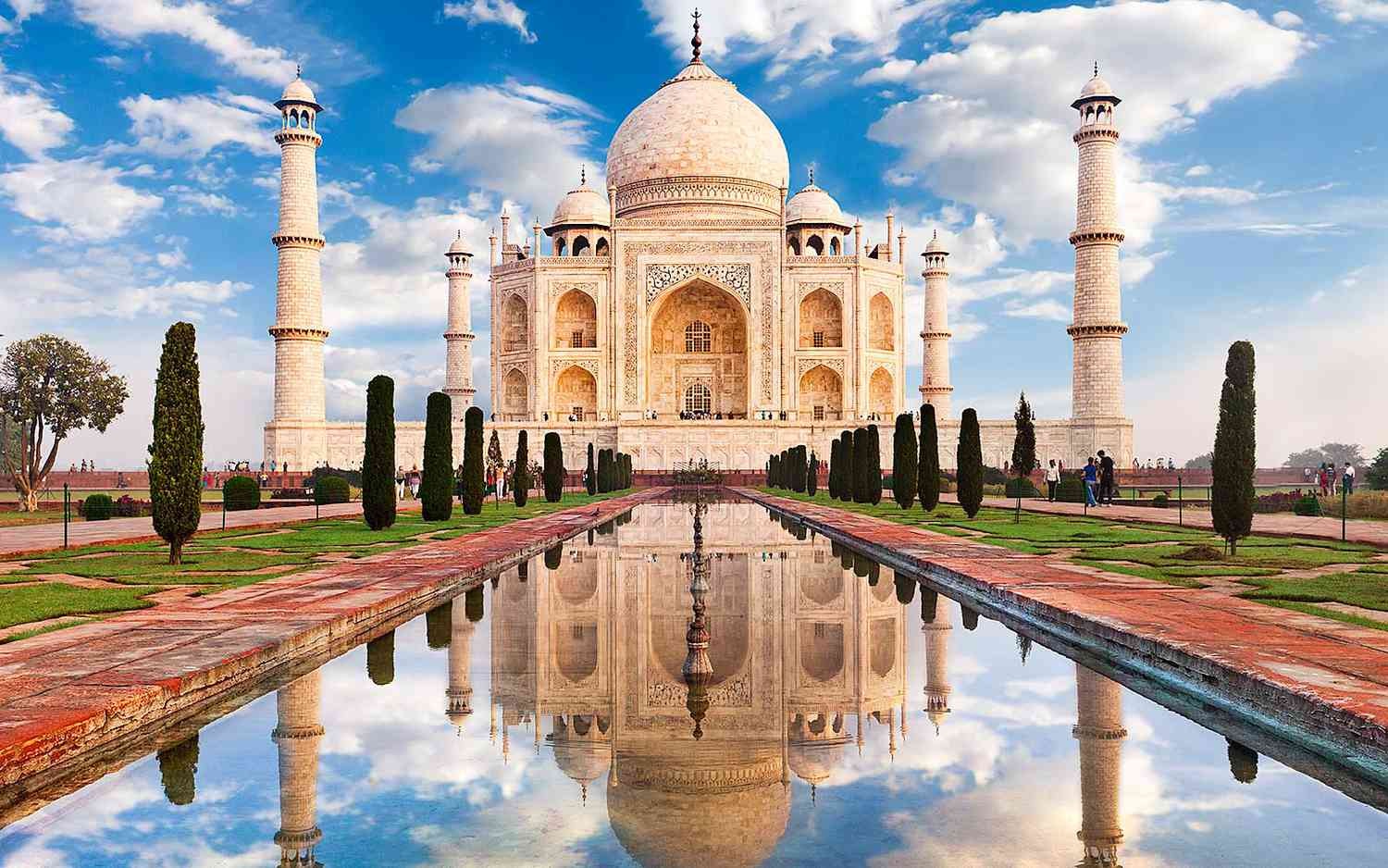
Agra Jaipur
- Durations: 05 Nights / 06 Days
Day 01: Delhi – Jaipur
Morning our car will pick you up from your designated hotel & drive to Jaipur.
Jaipur: The origins of the beautiful city of Jaipur can be traced back to the eighteenth century, during the reign of Jai Singh II who ascended the Amber throne in 1699. Jaipur today epitomizes the spirit of Rajputana. Inspite of growing into bustling metropolis, it still retains it’s character and history.... a beautiful fusion of yesteryears and modernity. For long called the Pink city because of the extensive use of the locally abundant pink plastered stone, painted so in honour of the visit of the royal consort of Queen Victoria. Jaipur thrills the soul with its massive forts, magnificent palaces, exquisite temples and lush gardens.
Upon arrival check in at Hotel.
Overnight at Hotel
Day 02: In Jaipur
After breakfast you will visit Amber Fort. Hill forts were always important to the Rajput rulers. Belonging to the Hindu “Kshatriya” or warrior class, they believed in the line from the sacred holy book, the Purana that “a fort is the strength of a king”. They built a number of such forts all over the state of Rajasthan; some made for purely defensive purposes, but most built as fort palaces. Amber is one of the finest examples of a fort palace, built similar in style to the surrounding richly decorated Mughal courts.
This afternoon you will proceed on a city tour of Jaipur. You will tour part of the City Palace which is open to the public. The most striking building on entering through the Atish Pol or stable gate is the beautiful marble and sandstone Mubarak Palace, initially used to welcome foreign dignitaries and later used as the Cabinet Office. Today the palace houses the textile gallery exhibiting an excellent collection of costumes and rich textiles from the private collection of the Jaipur royal family. The armory is entered through the magnificent marble inlaid Singh Pol or Lion Gate. The most impressive part of the place is the Diwan-I-Khas or the hall of Private audience. Entered through a gateway richly decorated in pietra dura and flanked by a pair of elephants carved out of a single block of marble, the star exhibits of this area are a pair of enormous sterling silver vessels used to store holy water from the Ganges. The water was used by the Maharaja for his daily bath when traveling overseas, to protect him from ritual pollution. Also of interest is the Art Gallery which has a collection or royal memorabilia. The Jantar Mantar which you visit next is a collection of futuristic structures and astronomical instruments designed by Sawai Jai Singh the founder of Jaipur. This was a result of this intense study of Astrology and Astronomy, and these 17th century extraordinary structures are accurate even today.
Overnight at Hotel
Day 03: Jaipur - Agra
Post breakfast drive to Agra en-route visit Fatehpur Sikri, a UNESCO World Heritage site. A deserted red sandstone city that was built during the second half of the 16th century by the Emperor Akbar, Fatehpur Sikri (the City of Victory) was the capital of the Mughal Empire for only some 10 years. The complex of monuments and temples, all in a uniform architectural style, includes one of the largest mosques in India, the Jama Masjid.
After visit continue drive to Agra.
Agra: Two great Mughal monarchs, Akbar and Shah Jahan, transformed the little village of Agra into a befitting second capital of the Mughal Empire - giving it the name Dar-ul-Khilafat {seat of the Emperor}. Today, a visitor to Agra is caught up in a world of contrasting edifices of red sandstone and white marble, narrow gullies and quaint buggies, and that irresistible charm that this favorite city of the Mughal still retains. It is not surprising, that modern Agra still reflects its Mughal heritage most conspicuously.
Overnight at Hotel
Day 04: In Agra
Early morning visit the Taj Mahal by sunrise ,which is perhaps the world’s most perfectly proportioned monument. This stunning mausoleum immortalized the name of Shah Jahan’s last wife Mumtaz Mahal, “light of the palace”. Built by Indian artisans and artisans from neighboring Islamic countries, it is aptly described by the poet laureate Tagore as “A tear on the face of eternity”. Decorated with a mosaic of semi-precious stones and Persian calligraphy recreating verses from the Koran, the mausoleum is an “Urs”, an important place of pilgrimage since the empress died in childbirth making her a martyr. Prayers are said and passages from Koran are constantly recited in the mosque and cenotaph chamber.
After leisurely breakfast you visit Agra Fort. The present structure stands on the site of 14th century fort that was occupied by the Lodi Sultans of Delhi. When the Mughal Emperor Akbar established his supremacy in Northern India, he began his first architectural venture, rebuilding the fort as a beautiful fort palace. The work was completed by his son and grandson, highlighting the Mughal’s ability to blend defensive and decorative architecture. Richly decorated with marble and mosaic, it was in a part of this fort that Shah Jahan spent the last years of his life, imprisoned by his son Aurangzeb. His private quarters where he was confined, has a magical view of the Taj Mahal across the river Yamuna.
Balance day at leisure.
Overnight at Hotel
Day 05: Agra – Delhi
Morning free.
Afternoon drive to Delhi & drop at your hotel. .
===============================END OF TOUR ===================================
Leave a Reply